


The Role of HR Technology in Modern Staffing Solutions
Leveraging HR technology has become a necessity for all organizations because of its benefits for faster while maintaining operational efficiency. Today, hr staffing is no longer limited to filling roles—it has evolved into a strategic function supported by technology, data, and intelligent workforce systems. The Role of HR technology in modern staffing solutions is essential and it’s measurable in terms of management, effectiveness, profitability, etc. To manage human resources at scale, organizations must understand how HR technology supports hr staffing services and hr staffing solutions across the entire employee lifecycle. Modern HR platforms streamline the employee experience, improve decision-making, and increase productivity through performance analytics. As workforce models become more flexible—spanning permanent hires, contingent staffing, and interim staffing—technology plays a critical role in ensuring consistency and control.
What Is HR Technology and How Does It Support Staffing Solutions?

HR technology, or human resources technology, encompasses the software and tools used to manage a company’s human capital. This includes systems for recruiting, onboarding, payroll, benefits administration, performance management, learning and development, and employee engagement. From the perspective of hr staffing firms and internal HR teams alike, technology enables faster hiring, better workforce visibility, and improved compliance.
Modern HR technology often leverages artificial intelligence and machine learning to streamline processes, improve decision-making, and enhance employee experiences. For example, AI-driven tools support talent acquisition by screening resumes, predicting candidate success, and reducing bias. Cloud-based platforms allow HR teams and human resources staffing agencies to access data securely from anywhere, improving collaboration across locations.
HR technology also supports regulatory compliance by automating record-keeping, reporting, and documentation. This is especially important for organizations using mixed workforce models that include hr temp staffing, temp-to-hire staffing, and long-term employment. By integrating multiple HR functions into a single system, organizations reduce administrative burden while gaining actionable insights through analytics. Ultimately, HR technology strengthens workforce management solutions and enables scalable, compliant hr staffing.
5 Key Applications of HR Technology in Modern Staffing Solutions
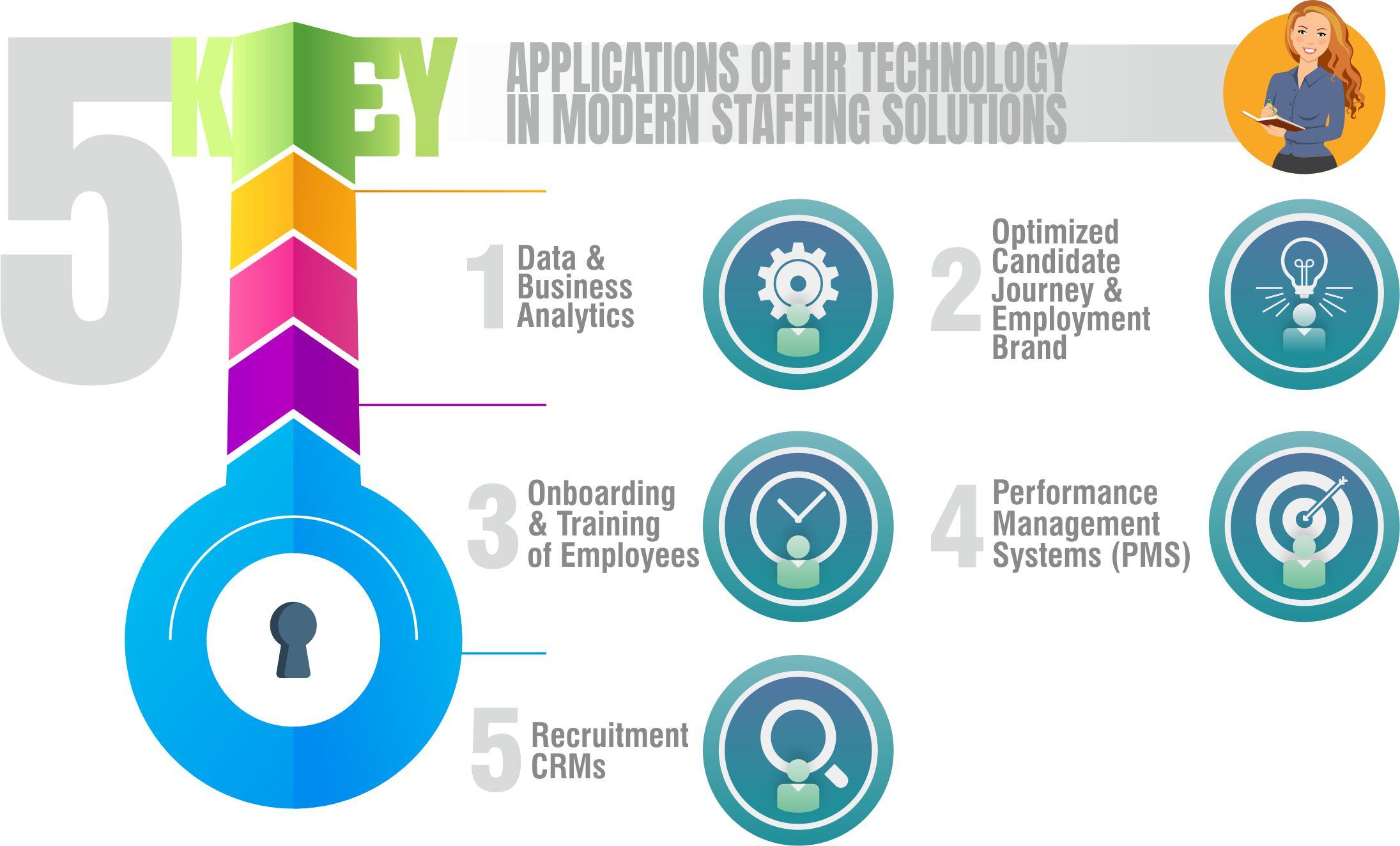
- Data & Business Analytics – Analytics is a powerful tool because it leverages the data to make informed decisions and eliminate organizational challenges and staffing problems. The use of data and business analytics in HR technology helps companies prepare strategies for maximizing employee performance, setting clear objectives & goals, and achieving the set targets.
- Optimized Candidate Journey & Employment Brand – Through the use of collaborative HR technologies, organizations can keep the candidates engaged and well-guided throughout the application process. Features like live chat, AI-enabled chatbots, easy-apply processes, and mobile application support can optimize the application process strengthen the company image, and establish a strong employer brand—an important differentiator for hr staffing agencies.
- Onboarding and Training of Employees: The use of HR Technology for onboarding employees helps to eliminate the complicated paperwork process with the help of electronic forms. HR technology also enables structured training programs, reducing onboarding time and supporting consistent skill development across staffing models, including temp to perm employment.
- Performance Management Systems (PMS) – PMS provides support for frequent feedback & appraisals besides other forms of feedback. They assist in establishing measures of work productivity, monitoring, and offering feedback that focuses on achievement. PMS helps to nurture a culture of continuous learning and improvement and helps to support the organization’s values and objectives among the employees.
- Recruitment CRMs – In the older times organizations used the management system for operational purposes. Due to technological advancements, organizations are now implementing their own Recruitment CRM system to communicate with potential candidates. During the recruitment phase HR managers can use Recruitment CRM software to effectively manage, establish engagement, and get follow-ups with the potential candidates to smoothen their recruitment experience.
Top 3 Advantages of Adopting HR Technology in Modern Staffing Solutions
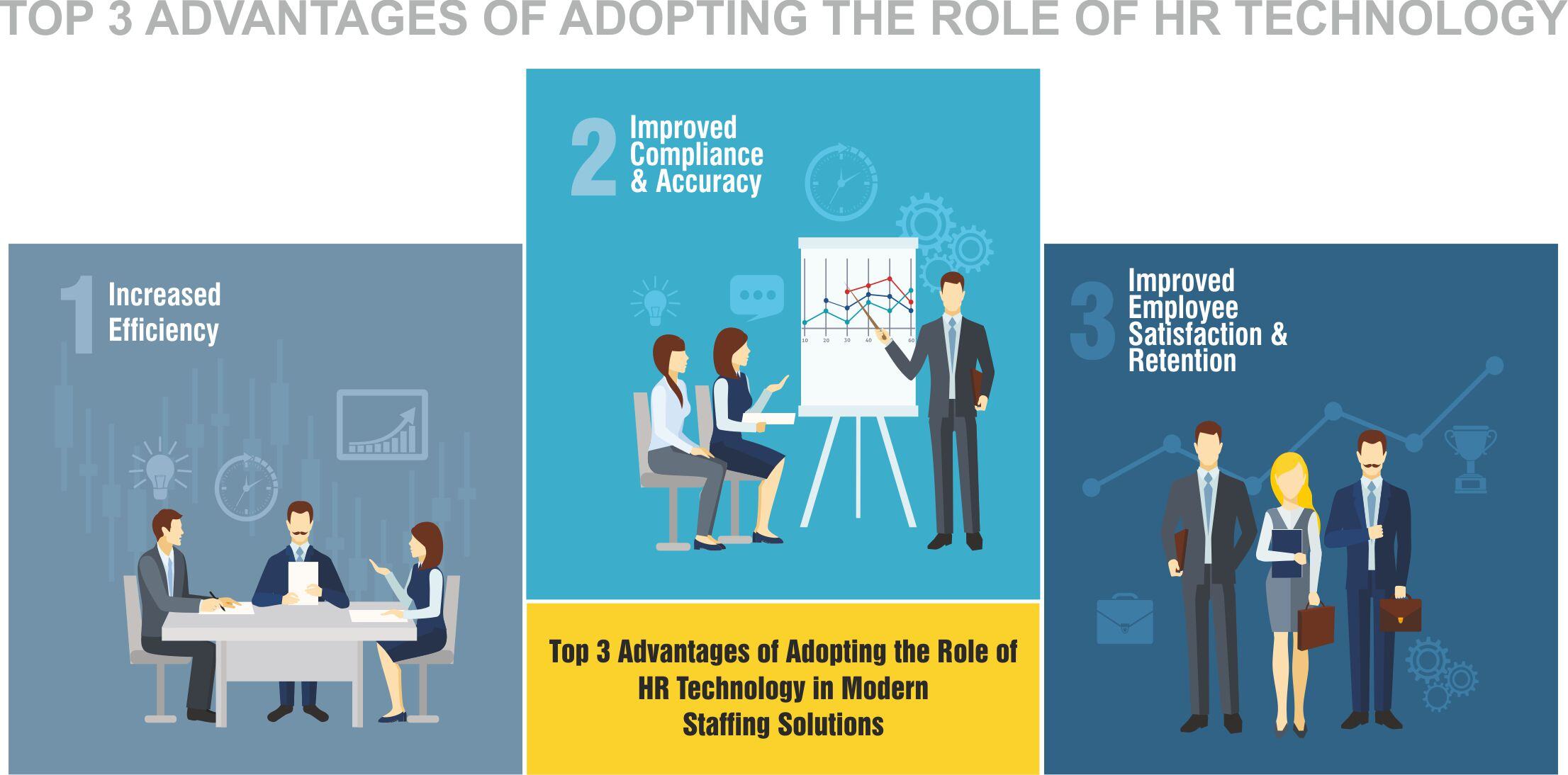
- Increased Efficiency – HR technologies eliminate the manual work process, thereby decreasing the workload of the human resources department, helping the HR professional to save time in setting interviews, sending out reminders to potential candidates, and eliminating repeated mistakes.
- Improved Compliance & Accuracy – Human Resources technologies, help in enhancing data handling and ensuring proper compliance with the rules and regulations on employment. Automated HR systems help to minimize the risk & decrease the probability of human error in record-keeping and make sure that each & every compliance task is addressed successfully.
- Improved Employee Satisfaction and Retention – HR technology helps to enhance the workplace environment by promoting open communication, skill development and training, and other professional advancement options. For instance, performance management systems that provide feedback and rewards can increase the motivation of the employees and their job satisfaction, which in turn increases their retention levels.
How HR Technology Strengthens Strategic HR Staffing
As workforce expectations evolve, hr staffing has become a strategic function that extends beyond recruitment. HR technology acts as the backbone of modern staffing by enabling organizations to manage complexity, scale operations, and maintain compliance across diverse employment models. For organizations working with hr staffing firms or operating internal staffing teams, technology provides structure and visibility that manual processes simply cannot match.
One of the key advantages of HR technology is its ability to unify staffing data. Organizations often rely on a mix of permanent employees, contingent staffing, interim staffing, and project-based resources. Without centralized systems, tracking performance, tenure, compliance status, and engagement becomes fragmented. HR technology consolidates this data, allowing leaders to make informed decisions that align staffing strategy with business goals.
Technology also supports flexibility. Models such as temp to perm employment and temp-to-hire staffing require careful coordination to ensure smooth transitions and compliance. HR platforms automate these workflows, reducing administrative risk while preserving agility. Compared to traditional hr staffing agencies that rely on manual coordination, technology-enabled staffing delivers faster response times and better workforce outcomes.
Additionally, HR technology enhances collaboration between organizations and their staffing partners. Shared platforms allow human resources staffing agencies to align hiring efforts, onboarding processes, and performance tracking with client expectations. This alignment improves accountability and strengthens long-term staffing relationships.
In a competitive labor market, organizations that invest in HR technology are better positioned to attract, manage, and retain talent. Strategic hr staffing supported by technology ensures consistency, scalability, and resilience—qualities essential for sustained growth.
Aligning HR Technology with a Long-Term Workforce Strategy
While HR technology delivers immediate efficiency gains, its long-term value lies in how well it supports workforce strategy. Modern hr staffing services must adapt to shifting business needs, regulatory changes, and evolving employee expectations. Technology provides the foundation for this adaptability.
Workforce planning is one of the most critical areas where HR technology adds value. By analyzing historical data and real-time workforce metrics, organizations can anticipate staffing needs, reduce turnover, and allocate resources effectively. These insights are particularly valuable for organizations balancing permanent roles with hr temp staffing and short-term assignments.
Technology also strengthens compliance across staffing models. Automated documentation, audit trails, and reporting tools help organizations remain aligned with labor laws. This is especially important when engaging hr temporary staffing agencies or scaling contingent workforces across multiple locations.
Another strategic advantage is talent development. HR technology supports continuous learning, performance tracking, and succession planning—ensuring that staffing decisions align with long-term growth objectives. For organizations transitioning employees from temporary to permanent roles, temp to perm employment workflows provide clarity and consistency.
Ultimately, HR technology transforms staffing from a reactive process into a proactive strategy. Organizations that align technology with hr staffing goals gain greater control, improved compliance, and stronger workforce outcomes.
FAQs on HR Technology in Modern Staffing Solutions
1. How does HR technology support modern hr staffing?
HR technology supports hr staffing by automating recruitment, onboarding, performance tracking, and compliance processes. It provides centralized visibility into workforce data, enabling organizations to manage permanent, temporary, and contingent workers efficiently while reducing administrative risk.
2. Can HR technology help hr staffing agencies improve results?
Yes. HR technology allows hr staffing agencies to streamline candidate sourcing, improve communication, and track performance metrics more effectively. This leads to faster placements, better candidate experiences, and stronger client outcomes.
3. How does HR technology improve compliance in staffing?
Automated systems ensure accurate record-keeping, standardized processes, and timely reporting. This is especially valuable when working with hr temporary staffing agencies or managing blended workforce models that require strict compliance oversight.
4. Is HR technology useful for temp-to-hire and contingent staffing models?
Absolutely. HR technology simplifies workflows for temp-to-hire staffing and contingent staffing by managing contracts, tracking performance, and supporting seamless transitions to permanent roles when needed.
Conclusion: The Future of Modern Staffing Powered by HR Technology
Staying up-to-date and taking advantage of modern HR technologies can help organizations manage human resources effectively, hire the best talent, and achieve faster growth. The integration of modern HR technologies into the organization helps HR professionals make their work easy and effective at every stage of recruiting. HR technologies help recruiters dedicate their time to preparing hiring strategies and plans for the smooth functioning of the organization and staying competitive in the business environment. Additionally, utilizing HR technologies can also improve employee engagement and retention rates, leading to a more productive and satisfied workforce. Overall, investing in modern HR technologies is essential for organizations looking to streamline their processes and stay ahead in today’s competitive market.
At Interim HR Consultancy we solve real-world HR-related problems with our HR tech solutions for your business continuity. By partnering with us you can achieve rapid, reliable, and effective human resource solutions that will support all your needs. Contact us now to connect with our experts.
Note: Interim HR Consulting cannot and does not provide legal advice. It’s important to consult with qualified counsel before adopting any new policies. It’s also your responsibility to determine whether a legal review of the work product is necessary prior to implementation.