


 As indispensable team members take time off to start or grow their families, businesses must employ innovative staffing strategies such as HR solutions, hr staffing, and support from a trusted temp staffing agency to ensure continuity and preserve momentum. This blog delves into the smart solutions that forward-thinking companies are adopting to seamlessly bridge the gap left by maternity leave, ensuring operations run smoothly and productivity remains high through reliable hr staffing agencies and interim staffing support.
Read on!
Every year female employees go on maternity leave creating a huge gap in the organization as it temporarily removes a key team member whose skills and expertise drive critical operations. While welcoming a child is a matter of great joy for the new parents, the employers, however, experience disruption in workflow and team dynamics. Many times there are issues that aren’t even talked about, so, before exploring staffing strategies to address this, it’s important to acknowledge the less-discussed challenges that arise during such breaks –
Challenges of Maternity Leave & How HR Staffing Supports Continuity
Workflow Disruption, Knowledge Transfer, and Communication Hurdles
- Workflow disruption: When a key employee takes maternity leave, it can significantly impact an organization’s productivity and the smoothness of its operations. This is primarily because such employees hold specialized knowledge and carry pivotal roles that take time to replace immediately. Their departure can create a knowledge gap, leaving remaining team members with extra responsibilities, which creates a potential gap in workflow. In a situation like this – redistribution of workload helps, but it massively increases stress and lowers employee morale if not managed carefully. Additionally, the transition period also leads to a temporary decrease in productivity as the team takes time to adjust to the new arrangement. Many businesses rely on hr staffing solutions and hr temp staffing to stabilize workloads during such periods.
- Knowledge transfer issues: This is one of the most common challenges a client may face during the maternity transition. If the knowledge and responsibilities of the departing employee are not well-documented, transferring their expertise to other staff members can be tricky. It may even result in a loss of efficiency as other team members try to fill the gap without the necessary information or understanding of nuanced processes. Such issues aggravate further if there is insufficient time for a handover or if the replacement staff needs more context to assimilate complex duties.
- Rebuilding trust and rapport: When a key staff member goes on maternity leave, rebuilding trust and rapport becomes necessary, and the organization’s leaders must come forward to facilitate that. Clients who were once accustomed to the expertise of the departing employee may take a while to get used to the workings of the new team member and place them on the same pedestal. The rearrangement may also demand reassessment as trust is built through consistent performance and engagement. Many organizations turn to a human resources staffing agency or hr staffing firms to ensure smooth transitions.
- Potential financial implications: The costs associated with recruiting and training temporary staff can lead to increased labor costs. Suppose the temporary replacement (when not hired by an agency) is unable to perform tasks with similar dedication and accuracy. In that case, productivity may decline, impacting revenue, especially if the role is tied to the company’s income-generating activities. Additionally, if the transition leads to decreased client satisfaction, it could result in losing business or client trust, potentially affecting long-term revenue streams. The financial impact, while often temporary, can be significant and requires strategic planning to mitigate.
- Communication Challenges: Sometimes, the employee going on maternity leave may serve as a critical communication hub, facilitating information flow between different departments or with clients. In their absence, messages can become delayed or misinterpreted, leading to errors or inefficiencies. Their colleagues or peers (filling in) may not be privy to existing communication or share the same rapport with clients and colleagues, which can result in misunderstandings or a lack of coordination.
Strategic HR Temp Solutions from Leading HR Staffing Agencies
How HR Temp Staffing Bridges the Maternity Leave Gap with HR Solutions & Interim Staffing
- Filling the productivity gap: When a key employee goes on maternity leave, there’s an immediate productivity gap that needs to be filled to maintain the operational pace. Temp staffing can swiftly bridge this gap by providing skilled professionals who can jump in and take on the required duties. Often, these temps have the right experience and skills from handling previous roles, making them adept at adapting to new environments quickly. By doing so, they keep projects moving forward and help meet deadlines, mitigating any lags in productivity. This is where temp staffing agency expertise and hr staffing services become crucial.
- Minimizing Overburden on Existing Staff: Temp staffing alleviates burnout by ensuring that the workload is distributed more evenly. Temporary workers can take on significant chunks of the workload, preventing the remaining permanent staff from becoming overburdened. This approach helps maintain a healthy work environment and ensures that employee satisfaction and morale remain high, which is critical for retaining talent. Organizations often supplement their teams with contingent staffing or interim staffing resources.

- Ensuring business continuity: Temporary workers ensure that all functions continue to operate smoothly, and service levels remain unchanged. This is particularly important in maintaining client satisfaction and trust, as clients may not even notice the change in personnel due to the maintained quality of work and service.
- Less training required (compared to ones not hired from a staffing agency): Temporary workers hired from reputed staffing agencies (such as ours) often require less training. They’re typically accustomed to quickly adapting to new work environments and may already possess the specific skill set needed for the role (thanks to our stringent selection criteria). This reduces the time and resources spent on training and allows for a more efficient transition, ensuring that productivity levels are upheld without a significant learning curve.
- Quick Integration and Specialized Skills: Temporary workers are not just stop-gap solutions; they bring with them specialized skills that can be advantageous to the team. Their varied experience can introduce fresh perspectives and efficiencies to projects. With a focus on quick integration, these professionals are adept at getting up to speed with team dynamics, project requirements, and company culture, contributing to the organization’s needs from day one.
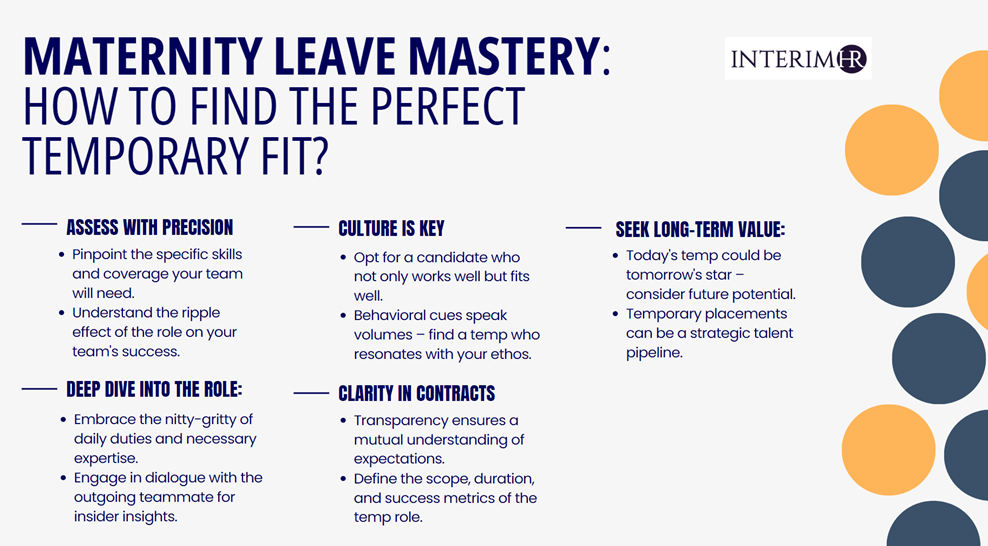
If you are looking to streamline your hiring process, then collaborating with a temp staffing agency can be highly beneficial. These agencies hold expertise in filling critical positions on an immediate basis, which enables quick turnaround, thereby minimizing disruptions in the workforce. Moreover, partnering with a staffing agency is cost-effective. They take the entire load off you and handle the employment process (end-to-end). Additionally, they offer guarantees and flexibility, which are unlikely to be found in the traditional hiring processes. Temporary staffing agencies also provide replacement options without any additional cost if a particular candidate does not fit. Solutions such as temp-to-hire staffing, project-based staffing, and managed service provider staffing further support organizations needing flexible workforce planning.
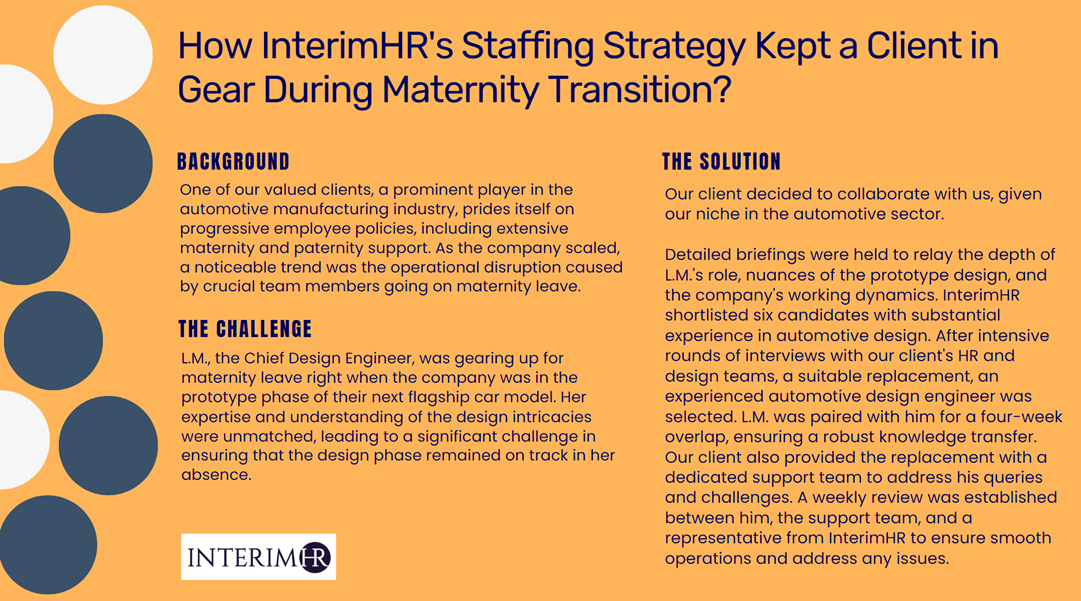
Seamless Integration Through Temp Staffing Agency & HR Solutions
Best Practices for Transitioning Temp Staff During Maternity Periods with HR Staffing Firms
To ensure seamless transitioning of temporary or contractual staff during the maternity period, it is extremely crucial to implement a set of best practices that safeguard productivity and maintain team cohesion. Some of the best practices that you can implement are –
- Comprehensive Knowledge Transfer Sessions: Ensure outgoing employees conduct detailed handovers to interim staff, covering all critical aspects of their roles.
- Assign a Point of Contact or Mentor: Designate a knowledgeable insider to guide the contract worker or temp staff through their tenure, providing support and answering questions.
- Regular Check-ins and Feedback: Schedule consistent meetings to review the temp staff’s progress, resolve issues, and adjust to feedback for continuous improvement.
- Provide Access to Necessary Resources: Equip the replacement with full access to required tools, systems, and information to enable them to perform their job efficiently.
- Foster an Inclusive Team Environment: Encourage a welcoming team culture that supports and integrates the temp staff, promoting effective teamwork and collaboration.
The strategic use of a contractual workforce during maternity leaves has proven to be an indispensable component of modern workforce management. It not only ensures that business operations continue unimpeded but also reflects a commitment to inclusivity and support for employees during pivotal life events. Looking ahead, businesses that aspire for growth and sustainability must embrace these flexible staffing solutions as a standard practice. This forward-thinking approach is what will distinguish industry leaders in the ever-evolving landscape of work.
Looking to maintain momentum during maternity leave periods without missing a beat? InterimHR is your answer. Reach out to us and discover how our temp staffing solutions can keep your business thriving and your team supported through strong hr staffing solutions and hr staffing firms expertise.
IHR cannot and does not provide legal advice. It’s important to consult with qualified counsel before adopting any new policies. It’s also your responsibility to determine whether legal review of work product is necessary prior to implementation.
FAQs on HR Staffing, Temp Staffing Agencies & Maternity Leave Coverage
1) How can HR staffing and temp staffing agencies help reduce workflow disruption during maternity leave?
Maternity leave often creates unexpected workflow challenges, especially when the departing employee plays a pivotal role in operations, client communication, or project delivery. This is where hr staffing, temp staffing agency support, and broader workforce strategies such as interim staffing become essential. When organizations rely on a strong staffing partner, they gain immediate access to skilled professionals who can fill temporary gaps with minimal ramp-up time. This reduces workflow disruption, maintains productivity, and ensures continuity in client-facing responsibilities.
A reputable human resources staffing agency typically maintains a vetted talent pool capable of stepping into roles on short notice. These professionals often come prepared with relevant experience and can quickly adapt to company systems, culture, and expectations. This reduces the knowledge transfer burden that internal teams would otherwise have to manage. Additionally, solutions like hr temp staffing, temp-to-hire staffing, and project-based staffing give organizations flexibility to match talent duration with business needs.
Another advantage of partnering with hr staffing agencies is that it minimizes stress on existing employees. Without temporary reinforcement, workload redistribution often leads to burnout and decreased morale. Temporary professionals prevent these issues by maintaining balanced workloads, protecting team productivity, and ensuring deadlines remain on track.
Moreover, employers can integrate broader staffing models such as contingent staffing, permanent staffing, or managed service provider staffing depending on role complexity. These models offer long-term pipeline stability, allowing companies to plan for future workforce cycles more effectively.
Overall, the combination of HR solutions, reliable hr staffing firms, and strategic temp resources ensures seamless operational flow—not only during maternity leave but throughout other planned and unplanned employee absences.
2) Why should businesses consider human resources staffing agencies instead of hiring temporary replacements independently?
Choosing a professional human resources staffing agency offers several significant advantages over independently hiring temporary workers during maternity leave transitions. Businesses often underestimate the time, cost, and risk associated with recruiting, screening, onboarding, and managing short-term employees. A specialized hr staffing agency eliminates these burdens by handling the process end-to-end, ensuring organizations receive highly qualified talent with minimal effort.
Staffing agencies operate with established talent pipelines, making it easier to source professionals skilled in specialized or niche roles. Independent hiring can take weeks or months, but an experienced temp staffing agency provides pre-vetted candidates within days—or sometimes hours. This rapid deployment is essential during maternity leave transitions where productivity gaps can escalate quickly.
Additionally, agencies apply rigorous vetting procedures, including skill assessments, background checks, and cultural fit evaluations, which protect organizations from poor-quality hires. Many agencies offer guarantees or replacement options at no added cost—something independent hiring cannot provide.
Staffing partners also manage administrative complexities such as payroll processing, compliance, benefits handling, and tax management. Solutions like corporate payroll services, managed service provider staffing, and direct hire staffing services reduce internal HR burdens significantly. This gives organizations time to focus on strategic priorities rather than administrative tasks.
Agencies also bring specialized expertise in labor market trends, compensation expectations, and workforce planning models such as contingent staffing, permanent staffing, interim staffing, and RPO solutions. This insight helps businesses make informed decisions about staffing needs beyond maternity leave.
Ultimately, professional partners deliver reliability, speed, compliance, and reassurance—making them a superior alternative to independent temporary hiring.
3) How does hr temp staffing support team morale and prevent burnout during maternity leave transitions?
When an employee goes on maternity leave, their responsibilities often shift unexpectedly onto their colleagues, leading to stress, overwork, and burnout. This situation can affect morale across entire teams. Incorporating hr temp staffing, contingent staffing, or temp-to-hire staffing offers a strategic way to maintain balance and support the mental well-being of internal staff.
Temporary professionals can absorb critical workload portions, allowing existing employees to focus on their core responsibilities without being overwhelmed. This ensures that productivity remains stable while protecting employee satisfaction—a major factor in retention. A strong hr staffing agency ensures temporary talent arrives trained, experienced, and ready to integrate seamlessly, reducing friction and increasing confidence in the department’s stability.
Beyond workload distribution, temp workers bring fresh perspectives that can enhance innovation. Their external experience often introduces new problem-solving frameworks, contributing positively to team dynamics. Meanwhile, long-term staffing partners can provide varied support models—including managed service provider staffing, executive recruiters, interim staffing, and project-based staffing—so organizations can tailor their approach to the complexity of the departing employee’s role.
The presence of temporary staff communicates organizational care: leadership acknowledges workload challenges and invests in protecting employees from burnout. This boosts morale and creates a supportive culture where employees feel valued, respected, and protected during seasonal shifts or unexpected gaps.
By maintaining operational flow through hr staffing solutions and temp staffing agency collaboration, organizations reinforce trust and ensure employees feel supported rather than stretched thin.
4) How do HR solutions help organizations plan long-term staffing strategies beyond maternity leave coverage?
While maternity leave presents a short-term staffing challenge, it also exposes broader workforce vulnerabilities that can be solved with proactive HR solutions. Organizations increasingly recognize the value of long-term planning models facilitated through partnerships with hr staffing firms, RPO solutions, and human resources staffing agencies to strengthen workforce stability.
Professional staffing partners offer deep insights into talent forecasting, enabling companies to anticipate skill shortages before they become disruptive. Through workforce analytics and strategic consultation, they help organizations identify recurring patterns—such as peak workload periods, annual leave cycles, and skill gaps—which influence long-term staffing choices.
Long-term strategies often include blended workforce models combining permanent staffing, contingent staffing, interim staffing, and direct hire staffing services. This diversified approach ensures coverage for predictable and unpredictable vacancies while still supporting business growth.
Staffing agencies also assist with succession planning, developing pipelines of qualified talent to fill future roles. This reduces dependency on last-minute hiring and strengthens organizational resilience. Additionally, solutions such as managed service provider staffing, project-based staffing, and temp-to-perm employment offer flexible pathways to secure long-term talent.
Another major benefit is improved cost efficiency. Agencies optimize hiring processes, reduce turnover risk, and streamline payroll through services such as corporate payroll services, ensuring financial stability alongside workforce continuity.
When combined, these HR strategies position organizations not only to manage maternity leave transitions effectively but also to build a robust workplace capable of handling future workforce demands with confidence.