

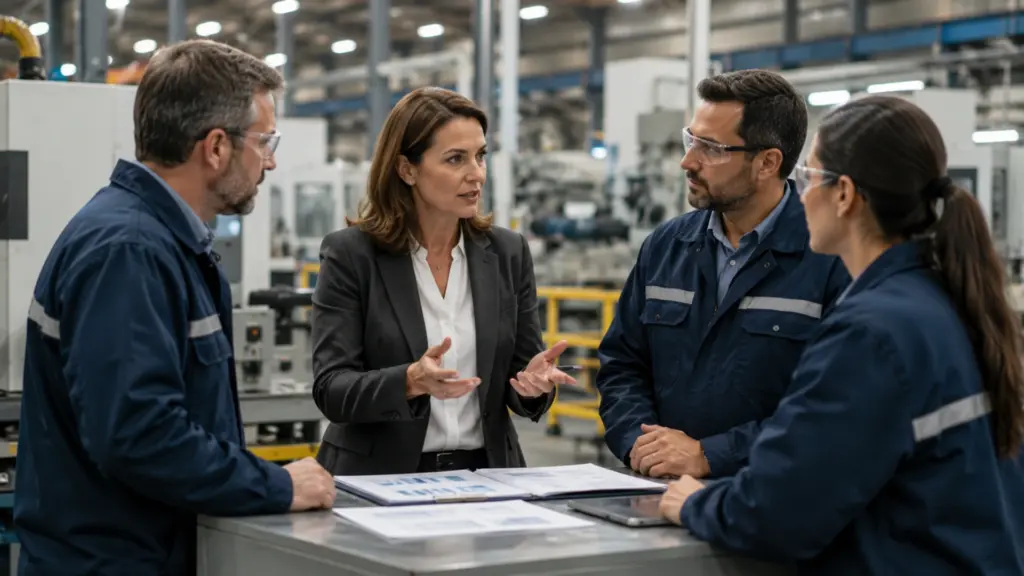
However, even now, the manufacturing industry cannot thrive without its people. Nonetheless, Human Resources management has become much tougher nowadays than it was ten years ago due to labor shortages, stringent regulations, evolving workforce demands, and rapid growth of the organization.
In this regard, the problem of most manufacturers is not recruitment but proper leadership of their workforce in changing conditions. This is when the solution provided by interim staffing comes in handy as it implies employment of experienced Human Resources managers for some period of time. Thus, the organization will be able to cope with current difficulties while getting ready for future success without making rushed decisions about hiring new Human Resources managers.
The role of interim HR leadership is considered to be one of the strategic HR solutions which guarantee business continuity amidst operational changes.
Why Manufacturing HR Has Become More Complex: Workforce Management Challenges
Human resource management teams in manufacturing are no longer responsible for recruiting and paying salaries. They increasingly support workforce planning, compliance, retention, and broader workforce management as manufacturing organizations adapt to changing operating conditions.
Labor Shortage and Skilled Workforce Gaps in Manufacturing Staffing
The United States Bureau of Labor Statistics confirms that there is a higher demand for skilled labor compared to supply in many places. It has become increasingly hard to recruit machinists, maintenance workers, welders, and production managers. This makes effective manufacturing staffing and workforce planning increasingly important.
Increasing HR Compliance Expectations in Manufacturing Workforce Management
Manufacturers are now expected to comply with regulation on safety in the workplace, employment legislation, and industry standards. With expansion into new locations, compliance can be harder to monitor. Strong HR leadership can help organizations maintain consistent processes and reduce workforce-related risks.
Workforce Retention Challenges and HR Leadership
High employee turnover is also a significant problem. The loss of employees impacts productivity and hiring costs. Workforce availability has also been identified as one of the top concerns by Deloitte manufacturing outlook.
What Is Interim HR Leadership? Understanding Interim HR Staffing
Interim HR Leadership is the engagement of skilled HR professionals who help guide organizations through transitional periods by becoming leaders.
Unlike traditional consultants, interim HR leaders become part of the leadership team and participate in day to day decision making until the business reaches a stable position. These professionals may be engaged through interim HR staffing arrangements when organizations need experienced leadership without immediately committing to a permanent executive hire.
Interim HR Leader vs HR Consultant vs Permanent HR Executive
| Factor | Interim HR Leader | HR Consultant | Permanent HR Executive |
| Primary Role | Temporary executive leadership | Advisory support | Long term leadership |
| Decision Making | Yes | Limited | Yes |
| Duration | Fixed term | Project based | Permanent |
| Best Use | Leadership gaps, restructuring, growth | Specialized advice | Ongoing HR strategy |
Unlike executive recruiters who focus on filling permanent leadership positions, interim leaders step in quickly to provide immediate operational support. Permanent staffing can then be considered once the organization’s long-term leadership requirements are clear.
The Biggest HR Leadership Challenges Manufacturing Companies Face Today
High Employee Turnover and Manufacturing Workforce Challenges
Production schedules can suffer when turnover increases. HR leaders must develop retention strategies while maintaining hiring momentum. Effective workforce management solutions can help organizations respond to changing workforce requirements while maintaining operational continuity.
Recruiting Skilled Trades Through Flexible Staffing Solutions
Qualifying professionals for specialized positions in manufacturing operations often entails strategic recruitment approaches, such as direct hire staffing services, temp to hire staffing, and permanent staffing methodologies. Depending on workforce requirements, manufacturers may also use contingent staffing to address short-term or variable labor needs.
Managing Multi-Shift Operations Through Effective Workforce Management
Large manufacturing facilities frequently operate around the clock. Supporting employees across multiple shifts requires consistent HR leadership and communication. This is where structured workforce management solutions and strong HR staffing support can help maintain consistency across locations and shifts.
Leadership Succession and Interim HR Leadership
Retirements and executive changes can result in lack of skilled HR managers within organizations. In these situations, HR leadership staffing can provide organizations with experienced professionals while they determine their long-term leadership requirements.
Compliance and Workplace Safety in Manufacturing HR
Manufacturing operations require meticulous focus on employment laws, workplace safety rules, and documentation. Good HR managers are essential in minimizing risks and ensuring compliance. Experienced interim HR executives can provide focused leadership when organizations need immediate support in these areas.
When Interim HR Leadership Is the Right Workforce Solution
Although every organization has different need, several situation make interim HR leadership especially valuable.
- Plant expansion requires rapid workforce growth
- Mergers and acquisitions involving workforce integration,
- Unexpected HR leadership vacancies ,
- Organizational restructuring ,
- Compliance remediation after audits or operational reviews
In these situations interim staffing provide experienced leadership without delaying important business decisions. Experienced interim HR leaders often bring proven processes from multiple organizations, allowing them to stabilize operations while helping internal teams prepare for long term success.
For manufacturers managing significant operational change, manufacturing workforce solutions can combine leadership support, workforce planning, and staffing strategies according to the organization’s immediate needs.
When Interim HR Leadership May Not Be Necessary: Choosing the Right Staffing Model
Not every HR challenge requires executive level support. An interim HR leader may not be the best fit when:
- Hiring needs are routine and predictable.
- Administrative HR task require temporary assistance.
- A stable HR leadership team is already in place.
In these situations, project based staffing or contingent staffing solutions may provide a more practical approach.
How Interim HR Leaders Create Immediate Business Value Through Workforce Management
One reason manufacturers choose interim staffing is the ability to create measurable business value quickly.
Interim HR leaders help organizations by:
- Stabilizing workforce operations faster
- Maintaining leadership continuity,
- Improving HR processes,
- Strengthening workforce planning
- Reducing operational and compliance risk
Because they are focused on immediate priorities rather than long term organizational politic, interim leaders can often accelerate important workforce initiative. Their role can include interim HR executive services designed around specific business priorities and transition requirements.
Manufacturing Example: How Interim HR Leadership Supports Rapid Workforce Expansion
Consider the situation where a manufacturing firm has decided to set up a second production unit following the establishment of new client relationships.
In such a scenario, the firm has to hire at least 200 people, implement new shifts, improve its hiring process, and be compliant with regulations in two different locations. Unfortunately, the HR director retires at an unexpected time.
Instead of postponing the growth plans until an executive is found, the firm decides to have an interim HR manager. In no time, the hiring process becomes streamlined, workforce planning improves, managers get proper guidance through their onboarding process, and the firm gets updated on all regulations in two places. Eventually, after operations stabilize, the firm proceeds to look for a permanent HR executive without many complications.
This illustrates how interim staffing works towards business continuity in situations of organizational growth and how manufacturing staffing solutions can support workforce requirements during periods of rapid expansion.
Best Practices Before Hiring an Interim HR Leader for Workforce Change
In order to guarantee success, it is important for organizations to be well prepared prior to implementing interim management.
- Set clear business goals.
- Formulate KPIs.
- Inform leadership changes within all departments.
- Develop a knowledge transfer plan prior to implementation.
Clear expectations help interim leaders focus on business priorities from day one. Organizations should also establish whether they need temporary HR leadership, broader HR solutions, or longer-term staffing support before beginning the engagement.
Manufacturing HR Leadership Checklist for Interim HR Staffing
Before deciding whether interim HR leadership is appropriate, ask:
✔ Is there an immediate HR leadership gap?
✔ Is workforce growth creating operational pressure?
✔ Are compliance requirements becoming more complex?
✔ Is the organization undergoing restructuring or expansion?
✔ Does the business require executive level decision making rather than administrative support?
If the answer is “yes” to several of these questions, interim HR leadership may provide the stability needed during organizational change.
Conclusion: Using Interim HR Leadership During Workforce Change
It is a time of evolving problems that manufacturing firms must tackle in their environment. Whether it be labor shortage issues, compliance, leadership transition, or even expansion, HR management plays a crucial role in making sure that the organization does not experience instability during such times.
Even though there will always be a need for permanent leaders in any organization, interim staffing is something that can help manufacturing firms solve any pressing issues related to their workforce. Depending on the situation, organizations can also use project-based staffing, contingent staffing, or direct hire staffing services as part of a broader workforce strategy.
Frequently Asked Questions About Interim HR Leadership in Manufacturing
What is interim HR leadership in manufacturing?
It is about appointing an experienced HR leader temporarily to guide the company in terms of workforce strategy at certain transition times.
Why do manufacturing companie hire interim HR leaders?
Manufacturing companies use such specialists in order to fill leadership roles, conduct plant expansion, compliance issues, and workforce stability management during changes. Interim HR staffing can provide experienced leadership while the organization evaluates its long-term requirements.
What HR challenges are unique to manufacturing?
Issues like shortage of skilled labor, managing multi shift workforces, compliance of workplace safety, workforce retention and succession of leadership are common HR issues. These challenges often require effective manufacturing workforce solutions and workforce planning.
When should manufacturers use interim staffing instead of permanent hiring?
Interim staffing will be more useful if a company needs experienced leadership in its operations immediately while looking for an executive in the future or during some business events
How does interim HR leadership improve workforce continuity?
They ensure decision making and HR team work, workforce planning and guarantee that business goes on continuously without problems. This makes interim HR leadership particularly useful during workforce transitions and organizational change.
Can interim HR leaders help during plant expansions?
Yes, they can coordinate recruitment, onboarding process, workforce planning, compliance and leadership. They can also work alongside broader HR staffing and manufacturing staffing solutions to support workforce growth during expansion.