


Workforce models have become more complex, data expectations higher, and leadership more reliant on real-time people insights.
At IHR, HR tech stack decisions are framed through a strategic lens. The focus is on aligning HR technology, staffing software, and talent analytics with real workforce needs, ensuring tools enhance decision-making rather than add operational complexity. By leveraging workforce management solutions and digital workforce management, organizations can build scalable, future-ready HR ecosystems.
Why HR Tech Stack Decisions Matter More in 2026 for Workforce Management Solutions
When HR tech stacks are outdated or poorly designed, organizations face:
- Inconsistent workforce data across systems
- Manual processes that slow decision-making
- Increased compliance and data security exposure
- Poor integration between staffing, payroll, and analytics
- Escalating software spend with low utilization
A well-structured HR software solution eliminates these inefficiencies while improving workforce planning and operational agility.
Core HR Tools Every Company Needs in a Modern HR Tech Stack

1. Core HRIS Systems for Scalable HR Tech Stack
In 2026, leading HRIS systems go beyond data storage to support compliance tracking, reporting, and workflow automation.
A strong HRIS should centralize:
- Employee records and job history
- Compensation and benefits data
- Compliance documentation
- Organizational structure and reporting lines
These systems form the backbone of any HR tech stack and enable seamless HR automation.
2. Payroll & Benefits Administration in Modern HR Systems
Modern payroll systems must integrate seamlessly with HR systems to ensure consistent data flow and reduce manual intervention.
In 2026, payroll and benefits systems should support:
- Multi-state and multi-country compliance
- Automated tax updates
- Real-time payroll reporting
- Integration with time and attendance systems
Integrated payrolling services within your HR tech ecosystem help reduce compliance risk and improve accuracy.
3. Talent Acquisition & Staffing Software for Workforce Planning
Recruitment has become increasingly data-driven. Staffing software and applicant tracking systems (ATS) must support faster hiring cycles, improved candidate experience, and better hiring decisions.
Key capabilities include:
- Automated job posting and applicant tracking
- Candidate pipeline analytics
- Integration with assessment tools
- Support for contingent staffing and project-based staffing
Modern staffing technology plays a crucial role in aligning hiring strategies with broader workforce planning goals.
4. Vendor Management System (VMS) for Contingent Staffing Visibility
A vendor management system enables organizations to manage temporary staff, contractors, and staffing vendors through a centralized platform.
Benefits include:
- Standardized vendor onboarding
- Cost and performance tracking
- Compliance oversight
- Visibility into contingent workforce spend
Organizations leveraging VMS solutions and managed service provider staffing models gain better control over vendor ecosystems and workforce costs.
5. Talent Analytics & Workforce Analytics Tools for Data-Driven HR
Talent analytics platforms transform workforce data into actionable intelligence.
Advanced workforce analytics support:
- Turnover and retention forecasting
- Workforce cost modeling
- Skills gap analysis
- Capacity and demand planning
These tools are essential for building scalable workforce management solutions and enabling data-driven decision-making.
How to Evaluate HR Software Vendors for Scalable HR Technology Strategy
Choosing the right HR software is as much about the vendor as the software itself. In 2026, vendor evaluation must go beyond demos and feature lists.
Business Fit Over Feature Volume in HR Software Solutions
More features do not equal more value. Organizations should evaluate whether a platform supports their specific workforce model, growth plans, and compliance needs.
Scalability and Roadmap in HR Technology Strategy
HR systems should scale with the organization. Vendors should demonstrate a clear roadmap aligned with evolving HR technology strategy.
Implementation and Support Model for HR Software Success
Poor implementation is one of the top reasons HR tech investments fail. Vendors should offer structured onboarding, training, and ongoing support.
Data Ownership and Portability in HR Systems
Organizations must retain ownership of their data and ensure they can extract it easily if systems change in the future.
Integration, Security & Data Requirements in Digital Workforce Management
Integration and security are no longer technical details, they are strategic requirements.
System Integration Across HR Tech and Staffing Technology
Disconnected HR tools create data silos and manual work. In 2026, HR systems must integrate with:
- Finance and accounting platforms
- ERP systems
- Time tracking tools
- Vendor and staffing systems
Integration supports digital workforce management and improves operational efficiency.
Data Security and Compliance in HR Tech Stack
HR systems store sensitive personal and financial data. Security requirements should include:
- Role-based access controls
- Encryption of data at rest and in transit
- Regular security audits
- Compliance with applicable data protection regulations
Strong compliance frameworks are critical for modern HR software solutions.
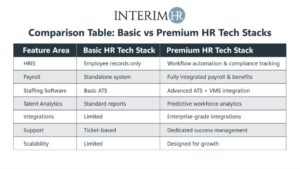
Comparison Table: Basic vs Premium HR Tech Stacks

How to Avoid Overpaying for HR Tech Stack Investments
Overinvestment in HR technology is common, especially when tools are purchased in isolation.
Start with Strategy, Not Software in HR Tech Investments
Organizations should define their HR technology strategy and workforce needs before selecting tools. Buying software without a clear use case leads to low adoption and wasted spend.
Audit Current HR Tools to Optimize Workforce Management Solutions
Many organizations already pay for overlapping features across platforms. A tech audit often reveals opportunities to consolidate systems and reduce costs.
Negotiate Contracts Carefully for HR Software Cost Efficiency
Multi-year contracts, unused licenses, and add-on fees drive up costs. HR leaders should negotiate based on actual usage and scalability needs.
Focus on Adoption to Maximize HR Tech Stack ROI
The best HR technology delivers value only when it’s used. Training, change management, and executive support are critical to realizing ROI.
HR Tech Stack Buying Checklist for 2026 and Workforce Planning Success
Before purchasing or upgrading HR systems, HR leaders should confirm:
- Clear alignment with workforce strategy
- Compatibility with existing HR systems
- Strong data security standards
- Scalable pricing model
- Transparent vendor roadmap
- Integration with staffing and vendor platforms
- Internal capability to support adoption
This checklist ensures alignment with long-term workforce planning and business goals.
Conclusion: Building a Future-Ready HR Tech Stack Strategy
In 2026, HR tech stack decisions directly influence organizational agility, compliance, and workforce performance.
A well-designed system powered by workforce management solutions, HR analytics, and integrated staffing software empowers HR leaders to deliver insight, efficiency, and strategic value.
If your organization is reviewing its HR technology strategy or planning a system upgrade, connect with IHR to build a smarter, future-ready HR ecosystem.
FAQs About HR Tech Stack and Workforce Management Solutions
What is the best HR tech for mid-sized companies in 2026?
The best HR tech stack for mid-sized companies is modular, scalable, and integrated. It typically includes:
- A robust HRIS system
- Payroll and benefits platform
- Staffing software
- Vendor management system (VMS)
- Advanced workforce analytics tools
This combination enables efficient HR automation, better workforce planning, and long-term scalability without unnecessary complexity.